Date: 13 July 2026
Authors: M. M. Valero Pérez · K. A. Coskuner · T. M. Giannaros , WG4 – European Network on Extreme Fire Behavior (NERO)
Summary:
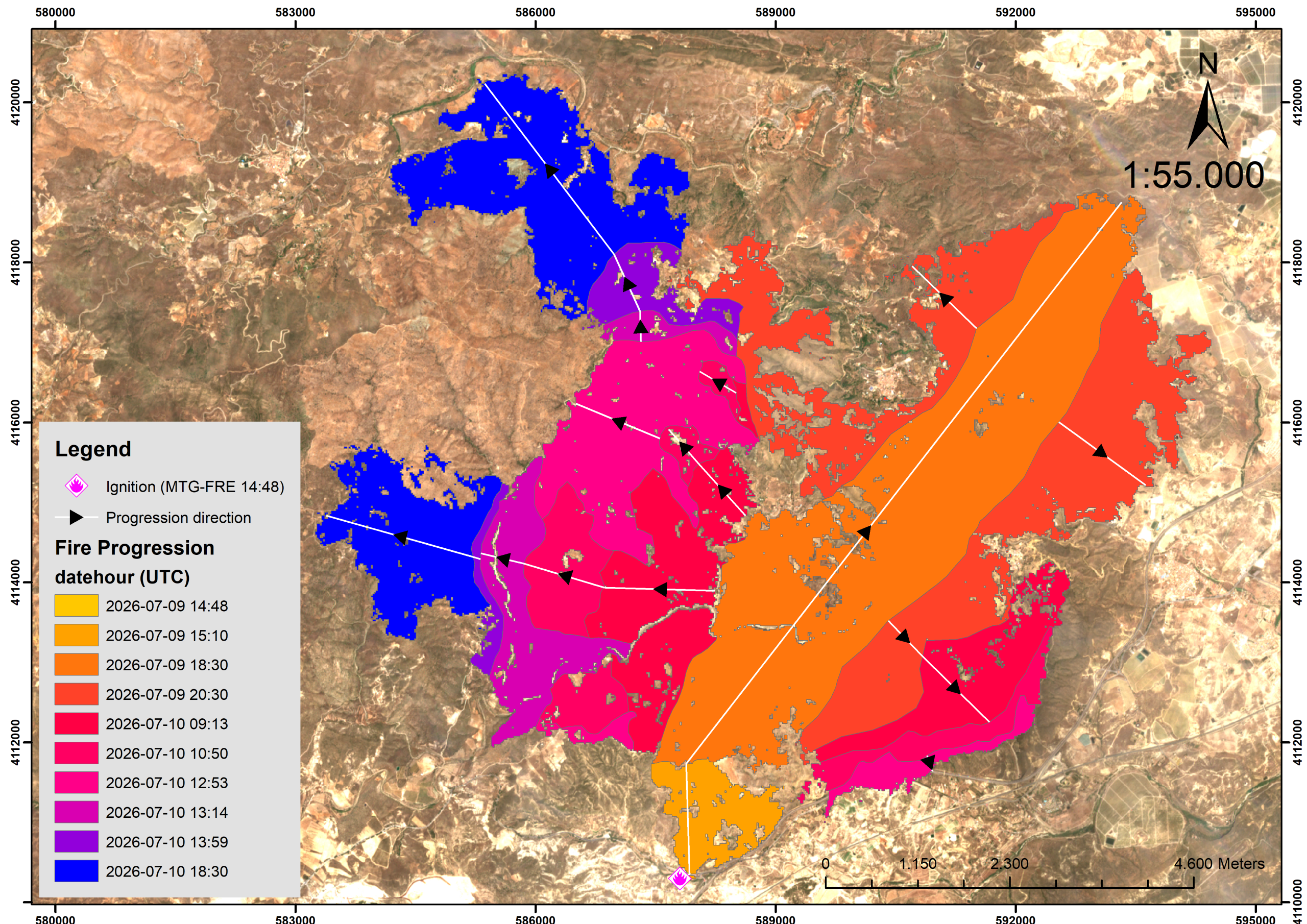
In the afternoon of 9 July 2026, a vegetation fire ignited beside the N-340A highway in the Almocáizar area of Los Gallardos, on the arid coastal fringe of Almería. The landscape here is classic Mediterranean grassland with scattered shrub over mild terrain — but the season had loaded it. An exceptionally wet winter grew a heavy grass crop, which was then cured to tinder by an unusually hot, dry May and June and two consecutive heat waves in the fortnight before ignition. The result was an abundant, continuous and highly available fuel bed.
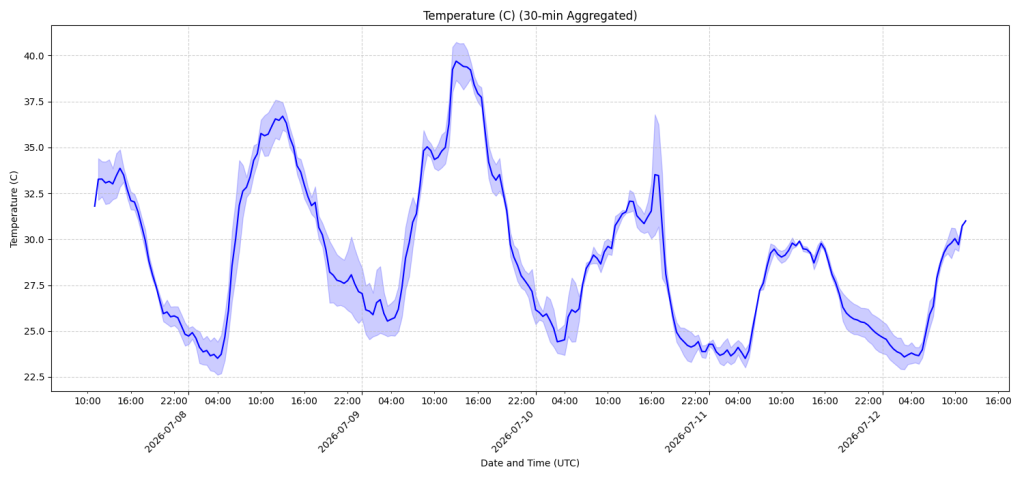
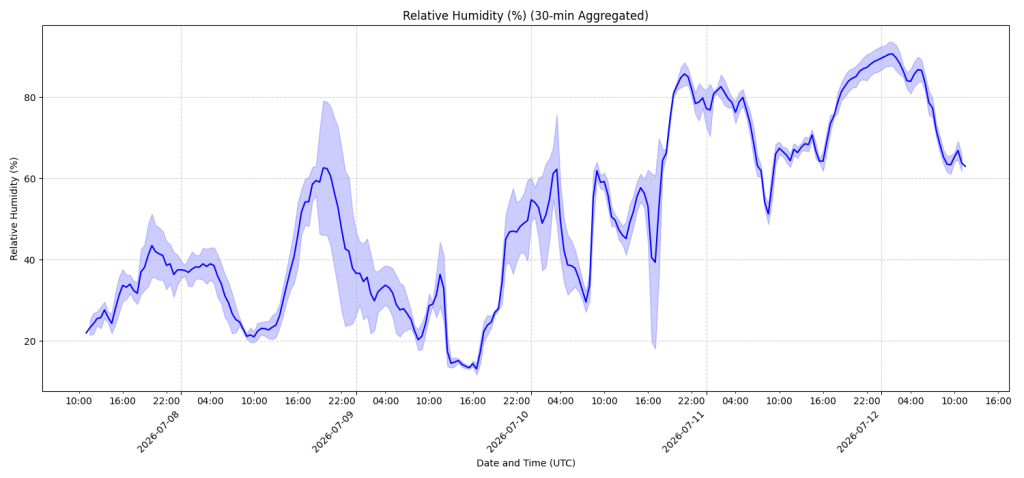
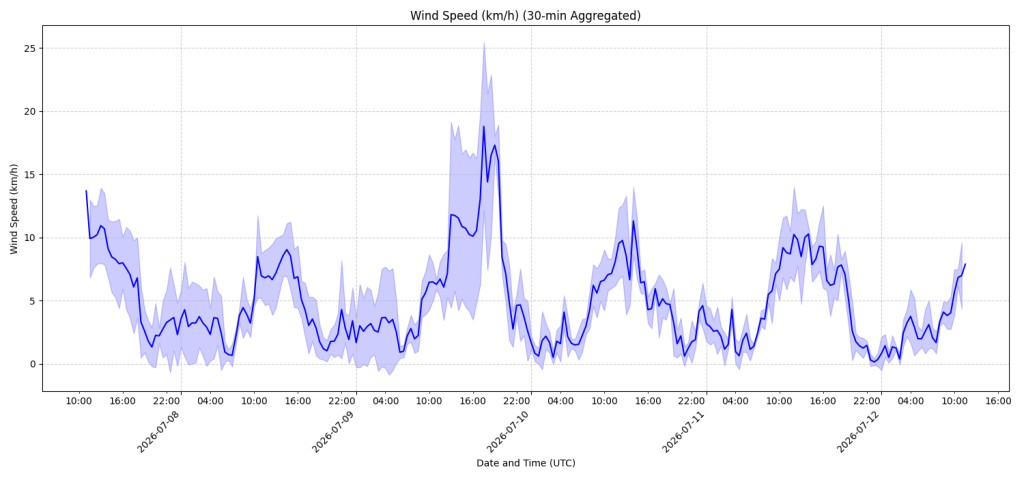
The weather on the 9th supplied the other half of the equation: dry south-westerly winds of 20–30 km/h aligned with the terrain, relative humidity near 15%, and temperatures peaking at 41.3 °C — with an overnight minimum that never dropped below 24.3 °C. Both were 10-day extremes for the local stations.
Los Gallardos Wildfire — Key Fire-Behaviour Highlights
Two-phase spread, two different drivers
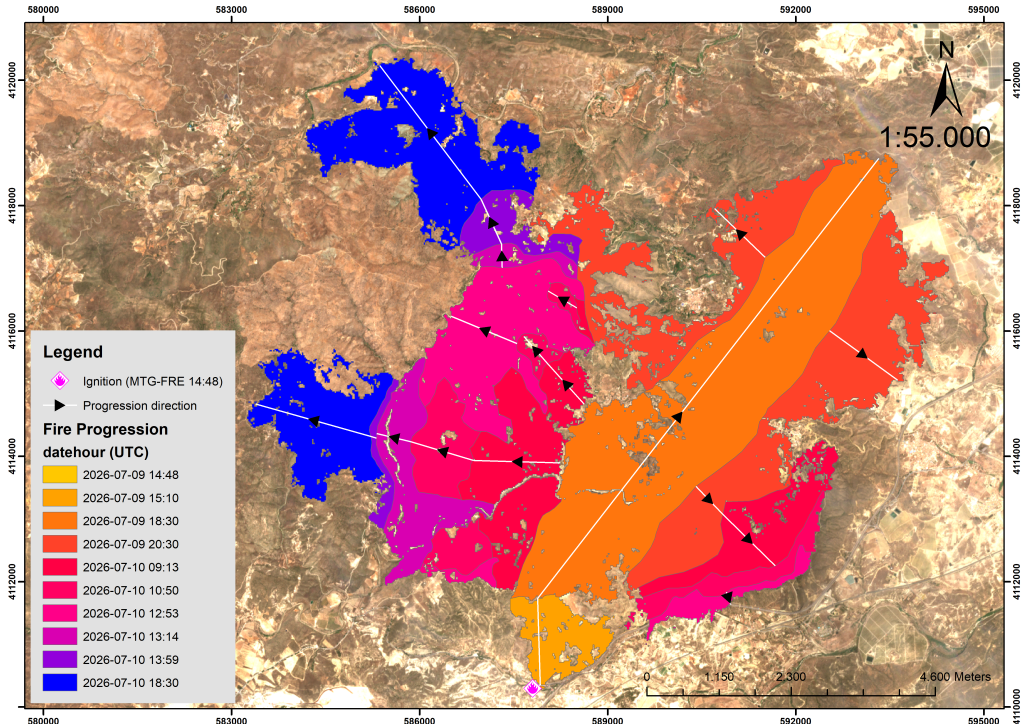
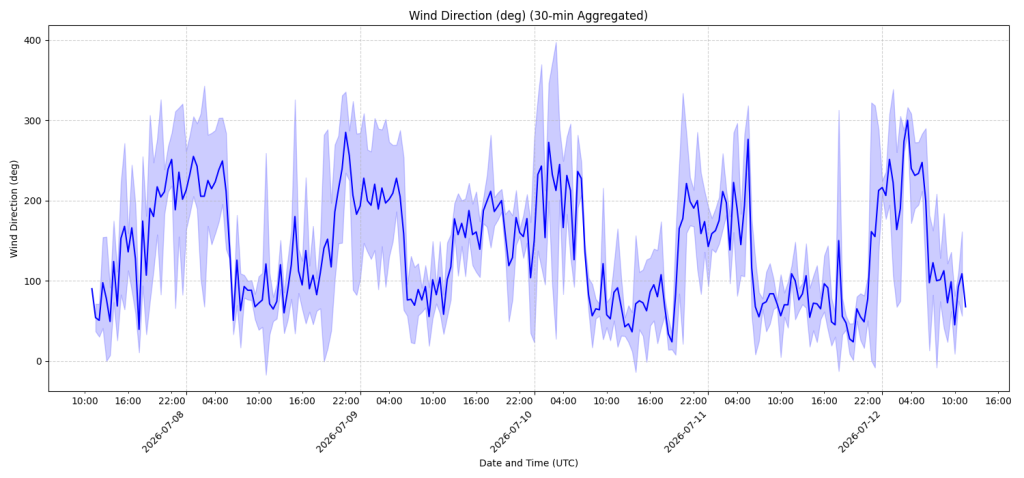
- 9 July (Day 1): wind-driven. Dry SW winds of 20–30 km/h, aligned with the terrain, drove rapid downwind spread from the roadside ignition point.
- 10 July (Day 2): wind + terrain coupled. Winds decelerated and backed to ESE, opening the fire’s left flank and pushing it into steeper, mountainous ground where slope and wind reinforced each other.
A short, violent burst — energy front-loaded
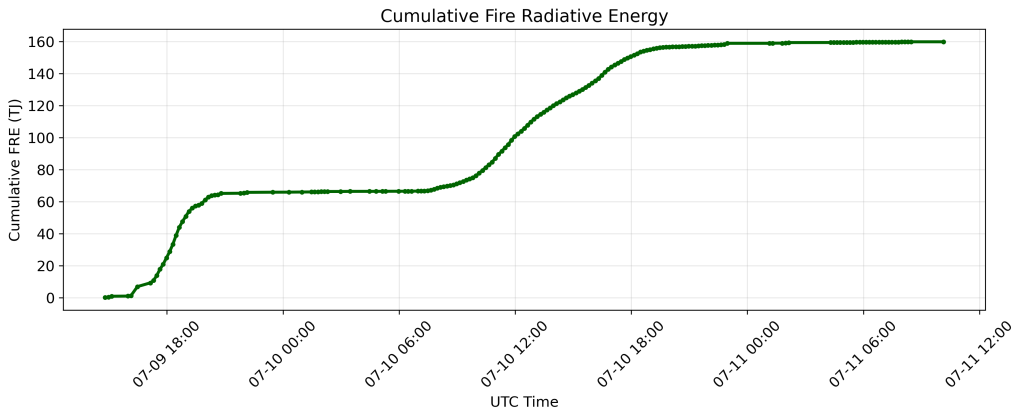
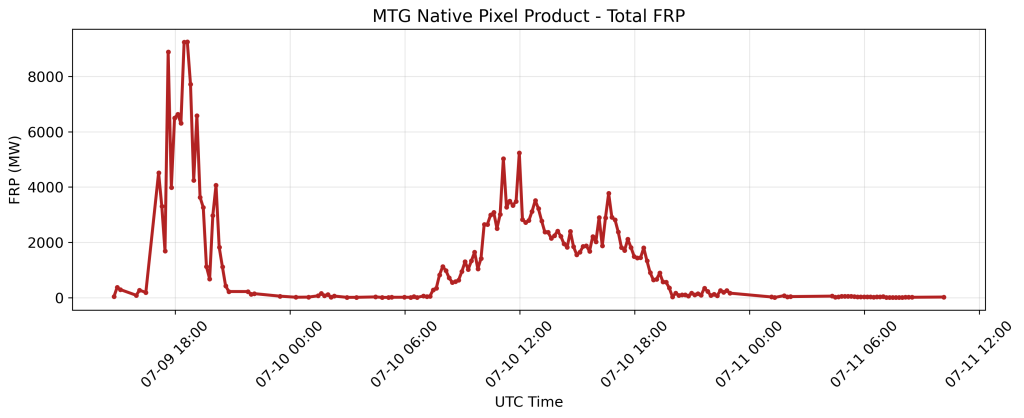
- Very intense activity in a narrow window on the evening of 9 July (≈19:00–21:00 CEST).
- Peak Fire Radiative Power ≈ 9,000 MW around 18:00 UTC, coinciding with the strongest measured winds — signalling high fireline intensity and fast spread.
- ~65 TJ released by the first evening alone; a second morning peak (~5,000 MW) on 10 July with re-intensification 12:30–15:30.
- Total ~160 TJ, with most energy released in the first 24 h after ignition — a classic fast, energetic run rather than a slow-burning event.
Extreme fuel + fire-weather alignment
- Fuel primed by climate whiplash: a very wet winter grew a heavy grass crop, then a hot/dry May–June plus two consecutive heat waves cured it to a continuous, highly available fuel bed.
- Critical fire weather on 9 July: ~15% relative humidity, 41.3 °C max (overnight min never below 24.3 °C) — both 10-day extremes.
Fire character
- Surface fire in Mediterranean grass with shrub, over mild terrain (200–800 m, ~500 m relief) — a landscape not usually associated with megafires, yet it produced deadly, fast-moving fire.
Outcome
- ~7,000 ha burned; stabilised 12 July, 11:00. ~1,400 evacuated; 13 fatalities, 10 missing (as of 13 July).
👉 Read the full brief: