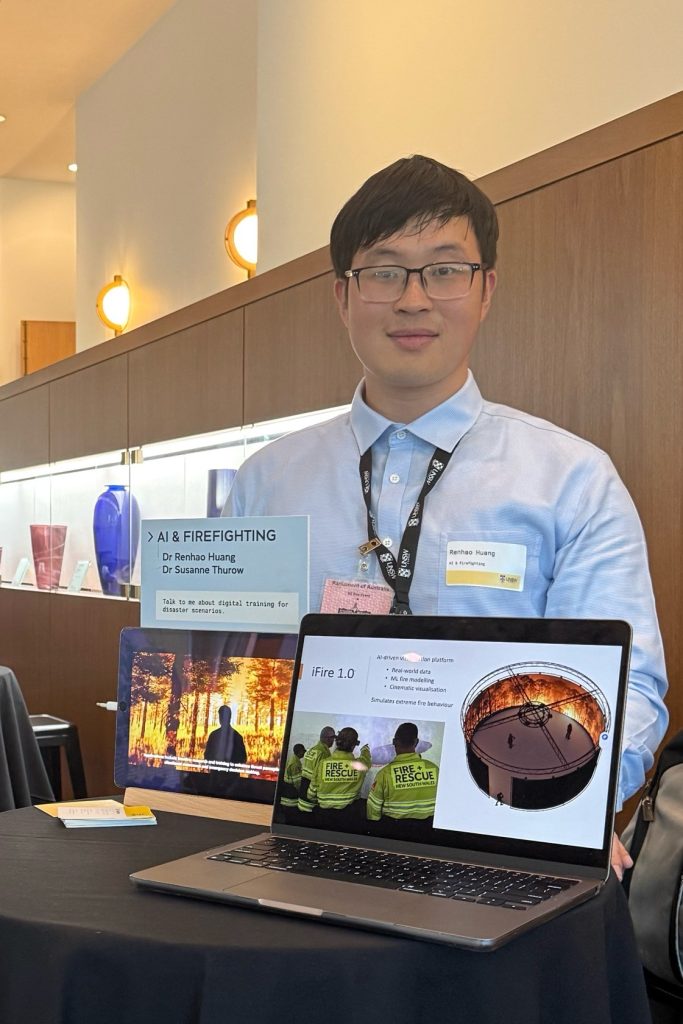
Renhao Huang holds a PhD in Computer Science from the University of New South Wales (2021–2025). His academic background lies in deep learning, computer vision, and pedestrian trajectory prediction. Building on this strong technical foundation, his current work focuses on applying artificial intelligence to wildfire research. At UNSW’s iCinema Research Centre, he contributes to the iFire project, where he explores deep learning–based approaches to wildfire behaviour modelling, bridging advanced computation with urgent real-world challenges.
🔥 Challenges in Wildfire Research
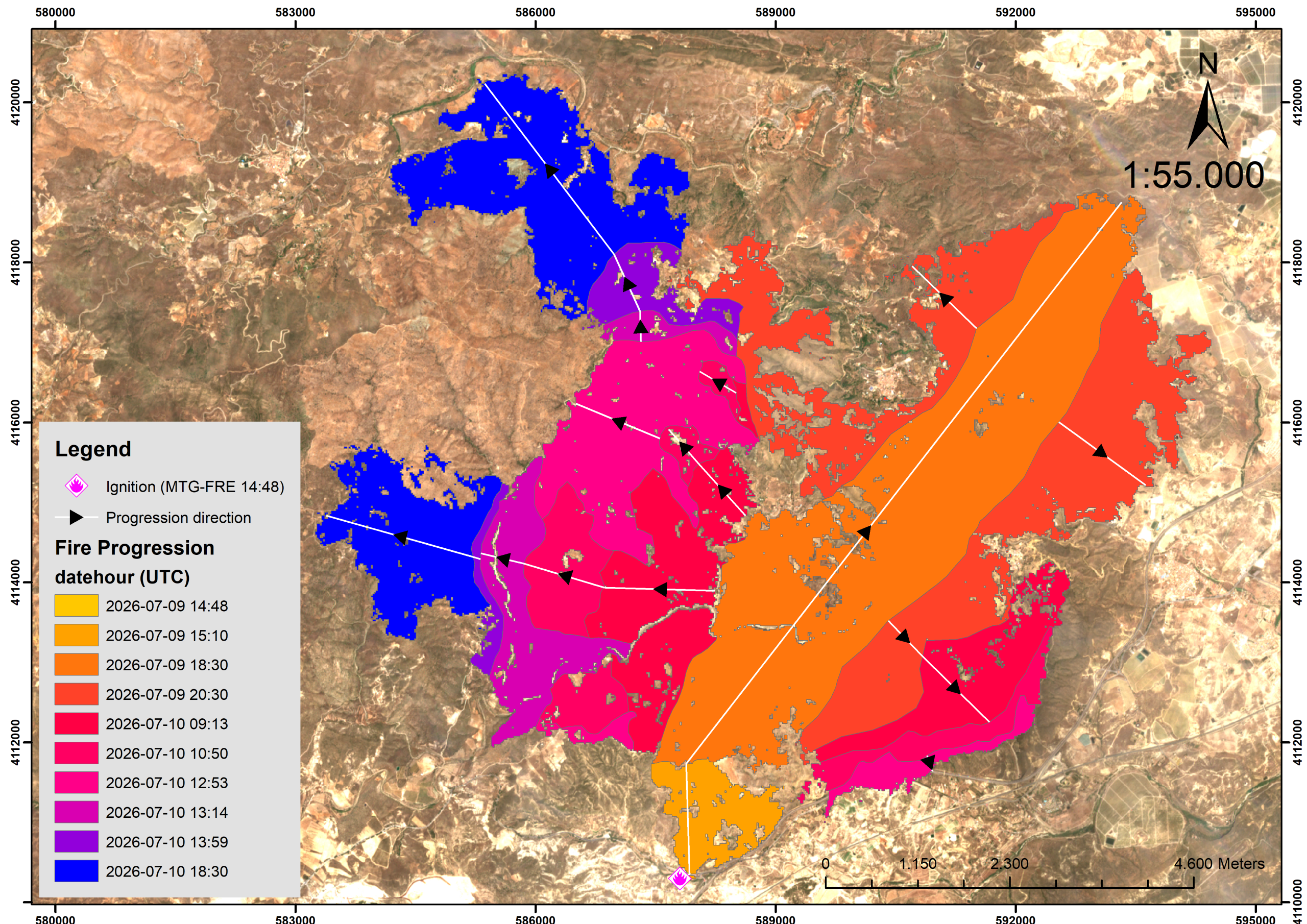
Accurately understanding wildfire behaviour is essential for preparedness, training, and decision-making. Current wildfire models are largely physics- and expert-driven, making them difficult to scale to complex and rapidly changing environments. In parallel, limited access to large, high-quality datasets constrains the development of robust AI-driven solutions. Renhao’s research addresses these challenges by advancing data-driven wildfire modelling and creating safe, realistic environments where first responders, researchers, and stakeholders can study and prepare for extreme fire scenarios.
🧠 What Makes My Approach Unique
The iFire project is the first to visualise wildfire events within AVIE, a 360-degree immersive and collaborative visualisation system. This platform allows users to experience wildfire scenarios together in a shared virtual environment. To overcome data scarcity, Renhao’s work integrates deep learning models trained on both simulated and real-world fire data. This hybrid approach is still rare in wildfire research, positioning iFire at the forefront of immersive, AI-driven wildfire behaviour modelling.
🔗 Project website: https://www.unsw.edu.au/research/icinema/our-research/projects/ifire
🚒 Impact on Wildfire Management
Renhao’s research supports wildfire management in two key ways. First, immersive visualisation enables diverse audiences—from fire crews to policymakers—to safely experience and understand wildfire dynamics, improving training and preparedness. Second, deep learning–based fire behaviour models enhance prediction accuracy by learning complex patterns from diverse datasets. Together, these tools support more informed analysis, faster decision-making, and more effective wildfire response strategies in an era of escalating fire risk.
🌍 Connecting with NERO
The iFire system is designed to visualise both Australian and European wildfire events, making collaboration with NERO highly valuable. Through NERO, Renhao sees opportunities for strategic guidance, domain expertise, and access to European fire datasets to strengthen AI-based wildfire modelling. This collaboration can enhance the scalability, relevance, and impact of iFire across different fire regimes and geographic contexts.
💡 Key Message
“Immersive visualisation and AI-driven modelling can transform how we understand, predict, and prepare for extreme wildfires.”