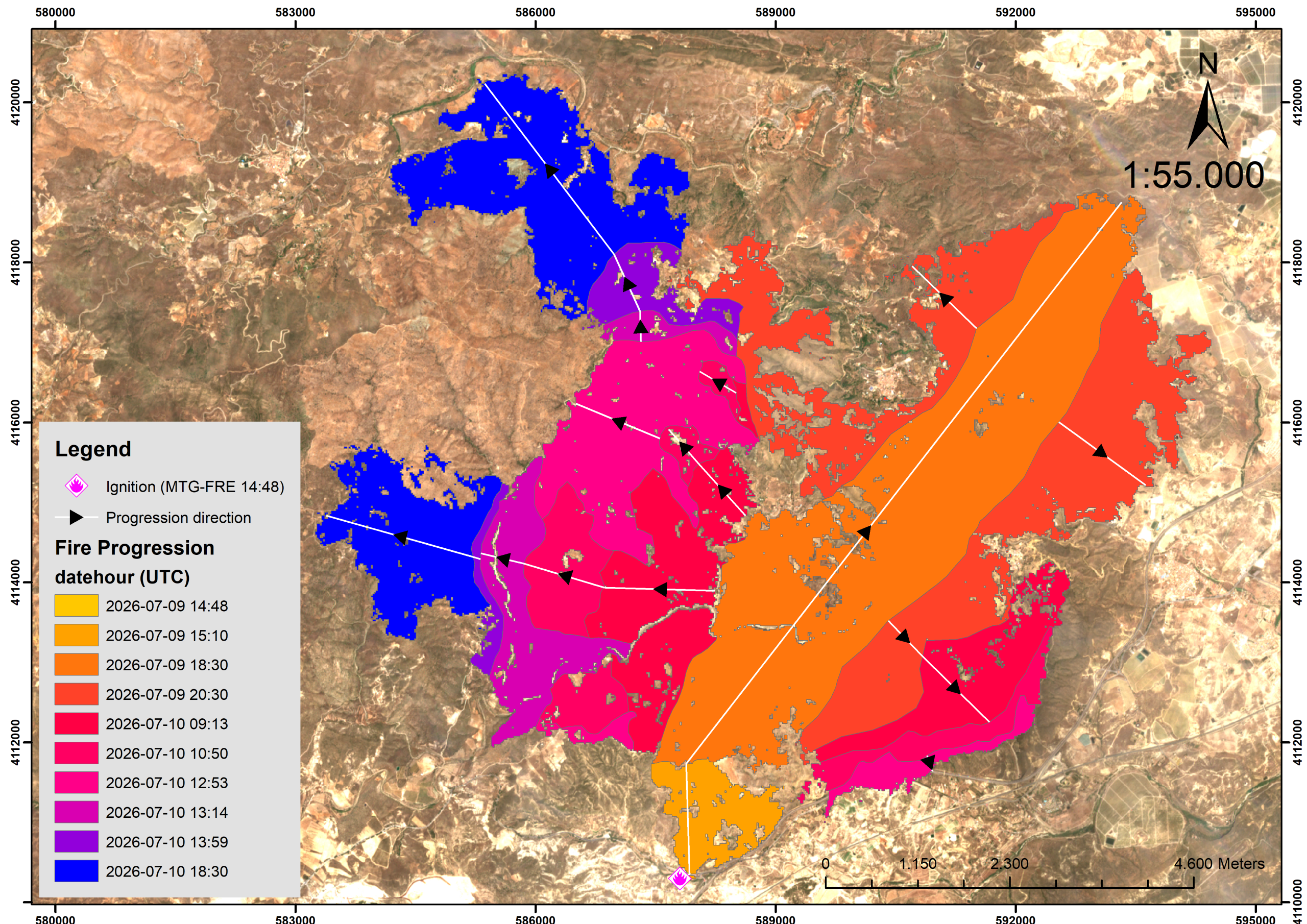
Extreme wildfires are no longer rare exceptions. Across Europe and beyond, fire seasons are growing longer, fires are burning more intensely, and the line between a manageable wildfire and a catastrophic one is increasingly difficult to predict. Understanding what drives these extremes and translating that understanding into better tools for those on the front lines is at the heart of what NERO does.
Today, we are proud to announce the launch of a Topical Collection, “Extreme Wildfire Events: Capacity-building Through Data and Process-based Understanding”, in Discover Hazards (Springer Nature) and now open for submissions.
What is a Topical Collection?
A Topical Collection is a curated set of peer-reviewed scientific articles, all published in the same journal and united around a common theme. For NERO, this Collection is designed to become the network’s most lasting scientific contribution: a single, authoritative resource on extreme wildfire events that researchers, practitioners, and policymakers can turn to for years to come.
What topics does it cover?
The Collection is organised around three pillars that reflect the full journey from scientific knowledge to real-world action:
- Observational Evidence: How do we systematically document and measure extreme wildfire events? This pillar covers datasets, field campaigns, and the tools used to capture fire behaviour in the real world.
- Process-Based Understanding and Prediction: What physical and environmental factors push a wildfire to the extreme? This pillar covers modelling, machine learning, fire-atmosphere interactions, and the search for early warning thresholds.
- Research-to-Operations: How does scientific knowledge become actionable? This pillar covers decision-support tools, training, communication methods, and policy-oriented analyses aimed at civil protection authorities and fire managers.
Who can submit?
The Collection is open to NERO members and to the broader wildfire research community worldwide. We welcome original research articles, case studies, brief reports, and data notes.
Submission deadline: 31 December 2026. All accepted articles will be published free of charge, as Discover Hazards currently operates under a full article processing charge waiver.
🔗 For more information and to submit your manuscript, visit: https://link.springer.com/collections/fcacbbjdge
The Collection is guest-edited by Theodore M. Giannaros (National Observatory of Athens, NERO Chair) and Nieves Fernandez Anez (Western Norway University of Applied Sciences, WG1 Leader), on behalf of the NERO Core Group.